No, a roof leak does not always mean that the tiles are damaged. Cracked, slipped or missing tiles are common causes of water ingress, but a tiled roof contains several other components that must work together to keep the property dry.
For homeowners in Wantage, Oxfordshire, identifying the exact entry point is essential. Replacing apparently damaged tiles without checking the surrounding roof may leave the real cause unresolved, allowing dampness to return during the next period of rainfall.
Other Reasons a Tiled Roof May Start Leaking
A roof can appear sound from ground level while concealing a defect in its flashing, underlay, drainage or junctions. A professional inspection should therefore consider the complete roofing system rather than focusing solely on the area above an internal stain.
Failed Lead Flashing
Lead flashing seals the joints where the roof meets chimneys, adjoining walls, dormers and other raised features. It directs rainwater over the roof covering instead of allowing it into the gaps around these junctions.
Water may penetrate when the lead:
- Splits or develops small holes
- Lifts away from the tiles
- Pulls out of the mortar joint
- Becomes distorted
- Separates from an earlier repair
These defects can be difficult to identify from below, particularly when the tiles surrounding the flashing remain intact.
Problems Around Chimneys
A leak near a chimney may originate from cracked mortar, porous brickwork, damaged flaunching or defective flashing. Rainwater can enter the chimney structure and travel towards the roof space before becoming visible.
The chimney pot, masonry, mortar joints and all sections of flashing should be checked together. Treating only one visible gap may not resolve water ingress if several parts of the stack have deteriorated.
Defective Roof Valleys
A valley carries water from two adjoining roof slopes and can receive a considerable volume of rainfall. Debris, cracks, failed joints or displaced materials can prevent it from draining effectively.
Water may then back up beneath otherwise sound tiles. Because valleys form part of a complex junction, the surrounding coverings, underlay and supporting materials should also be examined.
Deteriorated Roofing Underlay
The underlay beneath tiles provides secondary protection against wind-driven rain and moisture that passes through small gaps. As it ages, it can become brittle, torn or deteriorated around fixings and drainage points.
The tiles above may still appear serviceable, but water reaching a damaged section of underlay can enter the roof space. This is more likely when tile movement or inadequate overlap allows additional moisture beneath the covering.
Loose Ridge, Hip or Verge Details
Ridges, hips and verges protect the exposed lines and edges of a pitched roof. Cracked mortar, loose components or failed mechanical fixings can create openings that admit wind-driven rain.
Water entering near the top of the roof may travel down the underlay or along timbers before appearing considerably lower inside the property. The position of the damp patch may therefore be misleading.
Damaged Rooflight Seals and Junctions
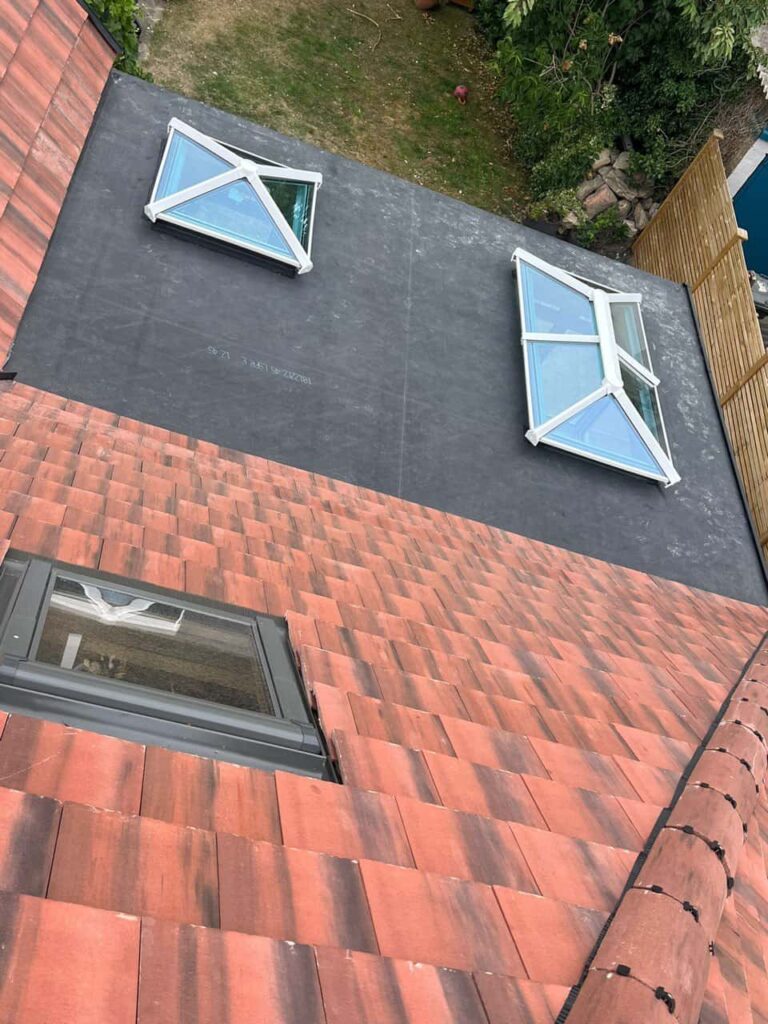
Rooflights introduce several joints into the roof covering. Their seals, flashing components and surrounding tiles must remain correctly aligned.
A leak around a rooflight may result from deteriorated seals, blocked drainage channels or failed flashing rather than damaged tiles. Water can also enter above the rooflight and travel towards it, making the unit appear to be the source.
Blocked or Overflowing Gutters
Gutters that are blocked by leaves, moss or other debris can overflow against the roof edge. Water may then reach the fascia, soffit, wall or lower part of the roof covering.
Warning signs include staining below the gutter, dampness near external walls and water spilling over during rainfall. Cleaning the gutter may restore normal flow, but loose joints, poor alignment or damaged roof-edge details may also need attention.
Condensation Can Resemble a Roof Leak
Not all moisture found in a loft has entered from outside. Warm, humid air from the property can rise into the roof space and condense on cold surfaces when ventilation is insufficient.
Possible signs of condensation include:
- Widespread moisture rather than one isolated patch
- Dampness beneath the underlay
- Water droplets on fixings or timbers
- Mould across several roof-space surfaces
- Symptoms that occur during cold weather without rainfall
Condensation and roof leaks can also occur together. The pattern of moisture, weather conditions and roof-space ventilation should therefore be assessed before the cause is confirmed.
Why the Internal Damp Patch May Be Misleading
Water does not always travel vertically from the point of entry. It can run along roofing underlay, battens, rafters or pipes before dripping onto insulation or ceilings.
The visible stain may consequently appear several feet from the original defect. This is why repairing the roof directly above the damp area does not always solve the problem.
Useful information for tracing a leak includes:
- When the dampness first appeared
- Whether it follows light or wind-driven rain
- Which direction the weather was coming from
- How quickly the patch dries
- Whether the affected area has leaked previously
These details should support, rather than replace, a physical roof inspection.
When Tiles Are the Cause
Tiles should still be examined carefully because small cracks can be difficult to see. Common tile-related defects include slipping, breakage, inadequate overlap and damage around nail holes or fixing points.
Neighbouring tiles and battens should also be checked. A replacement tile will only remain secure if the structure supporting it is sound and the surrounding coverings are correctly positioned.
Why Professional Leak Detection Matters
Effective roof leak repair begins with finding the route water is taking into the property. This may involve inspecting the coverings, junctions, flashing, drainage and accessible areas inside the loft.
A systematic assessment helps distinguish between tile damage and defects elsewhere in the roofing system. The resulting repair can then address the cause rather than temporarily concealing the internal symptom.
Conclusion
A roof leak does not always mean that the tiles are damaged. Failed flashing, chimney defects, leaking valleys, deteriorated underlay, blocked gutters and condensation can all produce similar signs. As water may travel before becoming visible, the whole affected area should be inspected.
LJ Roofing Wantage provides professional roof leak detection and repair services in Wantage, Oxfordshire. If you have noticed damp marks, dripping water or other signs of moisture, contact our team to arrange an assessment and identify the correct repair.
Call us on: 01235 428 993
Click here to find out more about LJ Roofing Wantage
Click here to complete our contact form and see how we can help with your roofing needs.